Crypto Explained Simple: A Beginner’s Guide to Understanding Cryptocurrency
Cryptocurrency has gone from being a niche curiosity to a powerhouse shaping the future of finance. What started with Bitcoin as a bold experiment is now a multi-trillion-dollar market, attracting everyone from institutional investors to tech enthusiasts — and yes, even your neighbor who just started talking about “hodling.”
Fast forward to today, and Bitcoin alone is worth over $2 trillion, making up nearly half the crypto market cap. This isn’t just another passing trend; it’s a seismic shift in how we perceive money, value, and trust in financial systems.
But let’s face it — for many understanding cryptocurrency goes beyond mere speculation; it demands a deep understanding about its underlying technology, how the digital assets work, the force driving their value, and how to navigate the ever-evolving market.
Whether you’re exploring digital assets to diversify your portfolio or chasing the next big win in decentralized finance (DeFi), this blog is everything you need to get started!
Cryptocurrency Explained for Beginners
Cryptocurrency is a digital or virtual form of money that relies on cryptographic technology to secure transactions, control the creation of new units, and verify transfers.
Powered by blockchain technology, cryptocurrencies like Bitcoin and Ethereum operate on decentralized networks, meaning they are not controlled by any bank or government authorities.
Here are some of the key terms you must know:
- Decentralized: Cryptocurrencies operate without a central authority
- Blockchain technology: A distributed ledger that records all transactions across a network of computers
- Cryptography: Ensures secure transactions and controls the creation of new units
The Intersection of Technology and Investment
Cryptocurrency is more than just another investment option. Unlike stocks or bonds tied to physical assets or company performance, crypto runs on decentralized networks powered by code and consensus. This setup opens up exciting opportunities but also brings its own set of risks and challenges.
As an investor, you must embrace a dual mindset:
- One as a savvy investor who sees the financial upside, and
- Another as a tech enthusiast who understands the blockchain mechanics driving these assets.
The ability to analyze both technical indicators and blockchain fundamentals can give you a significant edge in this fast-paced market.
Innovations like decentralized finance (DeFi), non-fungible tokens (NFTs), and layer-2 solutions are reshaping the rules of the game almost daily. Recognizing these trends early isn’t just smart — it’s your way to stay ahead of the curve!
How Does Cryptocurrency Work?
Source: Image
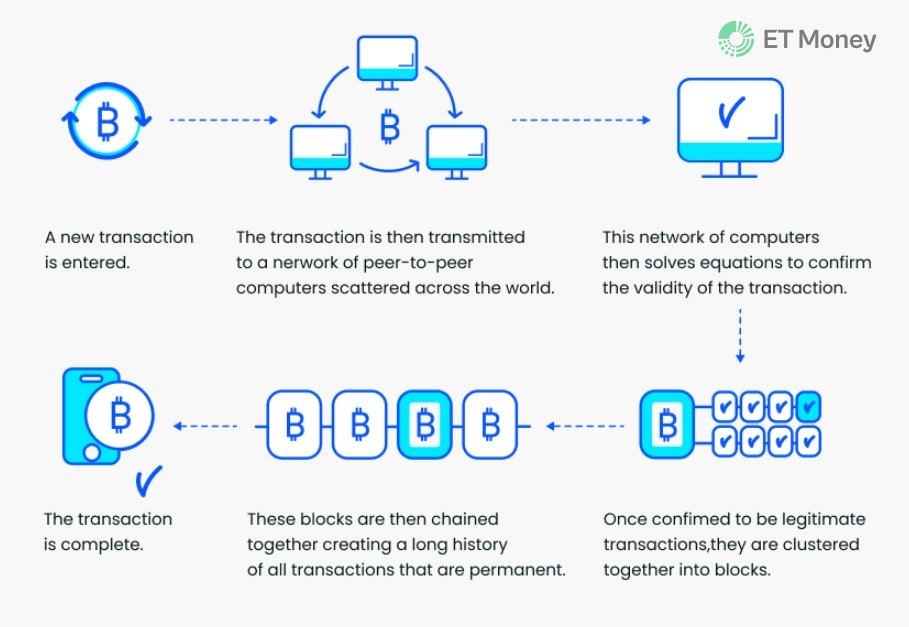
At the core of cryptocurrency lies in blockchain technology, a decentralized ledger that tracks and records all transactions within a peer-to-peer network.
Here’s how it works in technical terms:
- Transaction Creation: When a user initiates a transaction (example - sending Bitcoin), they create a digital signature using their private key. This cryptographic signature ensures the authenticity of the transaction.
- Broadcasting: The transaction is broadcasted to the network of nodes (computers) that participate in maintaining the blockchain.
- Validation: Nodes validate the transaction using consensus mechanisms. The most common mechanisms include:
- Proof of Work (PoW): Used by Bitcoin, where miners solve complex mathematical problems to validate transactions and add them to the blockchain.
- Proof of Stake (PoS): Used by Ethereum 2.0 and others, where validators are chosen based on the number of coins they hold and are willing to “stake” as collateral.
- Block Formation: Validated transactions are grouped into blocks. Each block contains a cryptographic hash of the previous block, linking them together in the chronological order.
- Consensus and Finalization: Once a block is formed, it is added to the blockchain after reaching consensus among nodes. This process ensures all participants have an updated copy of the ledger.
Real-Life Crypto in Action
Cryptocurrency isn’t just theoretical—it’s making waves in the real world, transforming how we pay, invest, and interact with money. It’s tech magic—but with real-world impact.
Bitcoin in El Salvador
Source: Image
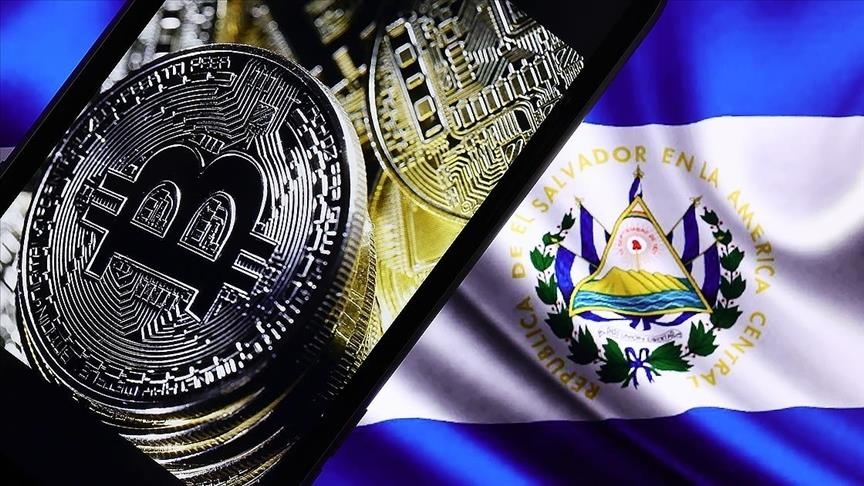
In order to promote financial inclusion and job creation and facilitate remittances, El Salvador became the first country to adopt Bitcoin as a legal tender in 2021. Citizens use the government’s Chivo wallet app to pay for everything from groceries to coffee.
Fast Cross-Border Payments
NFTs: The Digital Collectibles Craze
Platforms like OpenSea let artists and musicians sell digital works as non-fungible tokens (NFTs), giving buyers verified ownership while creators get paid—directly. From Beeple’s $69 million digital artwork to Nike selling NFT sneakers, the possibilities are endless.
DeFi: The New Finance Frontier
Forget banks—Decentralized Finance (DeFi) platforms like Aave let you lend, borrow, or earn interest on crypto without middlemen. It’s finance for everyone, anywhere.
How to Buy Cryptocurrency


Source: Image

Investing in cryptocurrency requires careful planning and execution. Here’s a detailed approach to buying cryptocurrency:
Step 1: Select a Cryptocurrency Exchange
Choose a reputable exchange that offers advanced features and liquidity, essential for a smooth trading experience.
Liquidity is key to smooth trading—more buyers and sellers mean faster, better-priced trades. Without it, you risk delays or slippage, where prices change while your order is being processed.
Exchanges like Coinbase Pro, Binance, and Kraken offer high liquidity, making it easier to jump in and out of trades quickly, even in the volatile market. Plus, more liquidity means less risk of big price swings.
Step 2: Account Verification
Complete KYC (Know Your Customer) requirements by submitting identification documents to comply with regulatory standards.
Step 3: Funding Your Account
Deposit fiat currency via bank transfer or credit card. Ensure you understand any fees associated with deposits.
Step 4: Select a Cryptocurrency
Bitcoin (BTC) is a popular starting point, but other options like Ethereum (ETH) or Solana (SOL) are worth considering.
Step 5: Order Types
- Market Orders: Buy at current market prices for immediate execution.
- Limit Orders: Set specific price points for buying/selling; these orders execute only when market conditions meet your criteria.
- Stop-Loss Orders: Automatically sell your assets when they reach a predetermined price to minimize losses.
Step 6: Secure Storage Solutions
- Consider using hardware or software wallets that provide convenient access while offering reasonable security measures. Some of the most popular wallets include — Ledger Nano S or Trezor.
If you are confused about which one to choose, here is the video
Crypto Tips for Investors in 2025
With the complex technologies, volatile markets, and ever-changing trends, understanding in cryptocurrency can be overwhelming. However, with the right approach, you can start investing confidently.
Here are some of the crypto tips for mastering the basics and navigating the crypto journey like a pro.
Conduct Fundamental Analysis (FA)
Understanding the basics is important! Fundamental analysis helps to evaluate the long-term viability and potential of a project by looking at some of the key factors:
- Whitepapers: Review the project’s whitepaper to understand its goals, technology, and roadmap. Choose one that clearly defines its purpose and the plan to achieve this goal.
- Team Credentials: Check the experience and track record of the team behind the project. A reputable team with industry experience adds credibility.
- Use Cases and Market Potential: Assess the real-world problems the cryptocurrency addresses and its potential to gain adoption.
- Tokenomics: Look at total supply, circulating supply, inflation rates, and how the token is utilized within the ecosystem. Poor tokenomics can limit growth and lead to market imbalances.
Master Technical Analysis (TA)
While fundamental analysis evaluates long-term potential, technical analysis helps you time your trades in the short term. Crypto markets are highly volatile, and understanding price movements can make a significant difference.
- Charting Tools: Platforms like TradingView provide advanced charting tools to track market data. Learning to read charts and interpret these indicators takes practice, but it equips you with the skills to make informed trading decisions.
- Key Indicators:
- RSI (Relative Strength Index): Measures market momentum and identifies overbought or oversold conditions.
- MACD (Moving Average Convergence Divergence): Highlights changes in market trends and potential reversal points.
- Fibonacci Retracements: Helps identify support and resistance levels, aiding in predicting price corrections or continuations.
Here are some of the important crypto indicators every investor must know:
Implement Risk Management Strategies
The crypto market’s volatility can lead to gains as well as high risks. Having a proper risk management strategy helps to safeguard your investments.
- Diversify Your Portfolio: Diversification reduces the impact of a single asset’s poor performance on your overall portfolio.
Tip: Spread your investments across multiple cryptocurrencies instead of putting all your funds into one project.
- Position Sizing: Determine the amount you invest in each trade based on your risk tolerance.
Tip: A good rule of thumb is to never invest more than you can afford to lose.
- Set Stop-Loss Orders: Use stop-loss orders to automatically exit a trade when the price drops to a certain level. This prevents emotional decision-making and limits potential losses.
Stay Informed
Cryptocurrency markets evolve rapidly, and staying updated is critical.
- Follow reliable crypto news platforms like CoinDesk, CoinTelegraph, and Decrypt for the latest developments, regulatory changes, and market trends.
- Twitter, Reddit, and Discord crypto communities offer insights, market analysis, and trend discussions from seasoned traders. Joining crypto clubs like Learning Crypto’s gives you expert insights, in-depth research, and a supportive Discord community.
- Regulatory changes can significantly impact market sentiment and asset prices.
Cryptocurrency Vs. Traditional Currency [A Tabular Comparison]
The debate between cryptocurrency and traditional currency is not merely an academic exercise; it reflects broader shifts in technology, economics, and societal values. While traditional currencies offer stability and widespread acceptance backed by government authority, cryptocurrencies provide enhanced privacy, security, lower transaction costs, and greater control over personal finances.
Here is the complete tabular comparison between cryptocurrency and our traditional currency:
| Feature | Cryptocurrency | Traditional Currency |
|---|---|---|
| Centralization | Decentralized; operates on a peer-to-peer network without a central authority. | Centralized; issued and regulated by governments and central banks. |
| Security Measures | Uses cryptographic techniques; transactions recorded on an immutable blockchain. | Uses physical security features and digital authentication methods. |
| Transaction Costs | Generally lower fees due to direct peer-to-peer transactions; often a fraction of a cent. | Higher fees due to intermediaries and currency conversion processes. |
| Transaction Speed | Transactions completed within minutes or seconds, regardless of borders. | Cross-border payments can take several days due to banking hours and checks. |
| Volatility | Highly volatile; prices can fluctuate dramatically (e.g., Bitcoin's rapid changes). | More stable; backed by government policies to maintain value. |
| Transparency | All transactions are recorded on public blockchains, promoting accountability. | Transaction records are private but can be manipulated by centralized authorities. |
| Privacy | Public visibility of transactions; some cryptocurrencies offer privacy features (e.g., Monero). | Transactions are private but accessible to authorities if needed. |
| Regulatory Oversight | Minimal regulation in many jurisdictions; evolving frameworks. | Heavily regulated with established laws governing issuance and transactions. |
| Adoption and Acceptance | Growing acceptance among merchants and users; still not universally adopted. | Widely accepted globally for everyday transactions; established trust. |
Ultimately, the choice between cryptocurrency and traditional currency depends on individual needs and circumstances. As technology continues to evolve and regulatory frameworks adapt to this new landscape, it is likely that both forms of currency will coexist—each serving different purposes within the global economy.
Why Crypto is a Game-Changer
No Middlemen, No Problem
Decentralized networks mean you don’t need banks or governments to move or store money. It’s peer-to-peer, secure, and fast.
Access for Everyone
All you need is a smartphone and internet connection. For the 1.7 billion people without access to traditional banking, crypto is opening doors.
Save on Fees
Cross-border payments and remittances are faster and cheaper, cutting out unnecessary costs.
Secure and Transparent
Blockchain tech ensures transactions are tamper-proof and visible to all. No shady backroom deals here.
Big Potential Returns
Cryptocurrencies have created millionaires overnight (and yes, some losses too). For investors, it’s a thrilling and potentially lucrative new frontier.
But Let’s Be Real—There Are Challenges
Volatility
Prices can soar and crash in hours. Remember when Bitcoin hit $64,000 in 2021, then dropped to $28,000 before bouncing back? Yeah, buckle up.
Regulation
Some countries embrace crypto (hello, El Salvador); others ban it outright (Example: China). It’s a Wild West out there.
Security Risks
While blockchains are rock-solid, exchanges and wallets aren’t always. In 2022, hackers stole $600 million from the Ronin Network.
Know three things that you should never do in a crypto exchange: https://www.youtube.com/watch?v=pgZP-voLGpE
Takeaway
If you’re tech-savvy and intrigued by investing, cryptocurrency could be your perfect fit. Once a niche idea, it’s now a multi-trillion-dollar market drawing everyone from institutional investors to everyday enthusiasts.
Success in crypto demands more than interest—it requires understanding blockchain technology, market dynamics, and emerging trends like DeFi and NFTs. For those who can analyze charts and grasp blockchain’s potential, the rewards are compelling.
Ready to start investing in cryptocurrency?
Explore our online resources to start your journey. Join our crypto club for expert insights, practical tools, and the latest updates—because cryptocurrency is here to stay!

Hard Money Brief
Free Every Week
Hard Money Brief
Free Every Week
Hard Money Brief
Free Every Week
Secure your edge: Get Crypto Made Easy PDF + weekly insights—free today.
No spam, unsubscribe at any time. By subscribing, you agree to our Privacy Policy. Need to unsubscribe? Unsubscribe from newsletter.
Disclaimer: This article is for educational purposes only and does not constitute financial advice. Cryptocurrency investments carry risk; you should always do your own research before making any investment decisions.