What Is Pepe Coin? A Look at the Token Behind the Meme
TL;DR: Pepe Coin (PEPE) is an Ethereum-based token launched in April 2023, inspired by the Pepe the Frog meme. It became one of the fastest-growing meme coins in crypto history.
It started as a comic strip panel in 2005. By 2023, the same green frog was sitting at a $1 billion market cap in under three weeks.
Whether that says something profound about crypto markets, internet culture, or both is up for debate, but it's hard to argue Pepe Coin isn't one of the more fascinating case studies in the meme coin space.
What You'll Learn About Pepe Coin
→ Where Pepe the Frog actually came from and why the token's creator has nothing to do with the original artist
→ How PEPE launched with no presale, no team allocation, and still hit $1 billion faster than Dogecoin ever did
→ What makes PEPE tick technically - ERC-20, burn mechanics, the no-tax policy, and what "deflationary" means here
→ Why there's no traditional use case, and what holders actually do with it
→ The August 2023 drama that shook community trust
→ The key milestones that drove PEPE's price history, without the speculative noise
From Comic Strip to Crypto: The Origin of Pepe the Frog

Before there was a token, there was a frog. And before the frog was a crypto mascot, it was just a laid-back cartoon character who liked to pull his pants all the way down to use the bathroom.
Matt Furie created Pepe the Frog in 2005 as part of his self-published comic series Boy's Club - a slice-of-life comic about four housemates doing very little with their time. Pepe wasn't designed to be iconic. He was just vibing.
One panel changed everything. Pepe's catchphrase "Feels Good Man" got screenshot and shared on MySpace, then 4chan, then everywhere else.
By 2008, it had taken on a life of its own, spawning hundreds of variations: Sad Pepe, Smug Pepe, Angry Pepe, and Feels Bad Man.
The internet had adopted him as a kind of universal emotional shorthand, and Furie had essentially lost control of his own creation.
How the Frog Got Complicated
By 2014, Rare Pepes were being traded online like digital collector cards, and in 2016, that concept moved onto the Bitcoin blockchain via the Counterparty platform, making Rare Pepes one of the earliest NFT collections ever created.
Over 1,774 unique cards from more than 300 artists. Some eventually sold for over $500,000.
That same year, things took a darker turn. Pepe became associated with alt-right messaging during the 2016 US election cycle, enough that the Anti-Defamation League added him to its hate symbol database.
Furie pushed back hard, launching the #SavePepe campaign and partnering with the ADL to reclaim the character. He also filed and won copyright lawsuits against several commercial uses of the image.
In 2019, Pepe got a redemption arc of sorts. Hong Kong protesters adopted him as a symbol of resistance and liberty, completely divorced from any political baggage the character had picked up in the West. Furie's response: "Pepe for the people."
The 2020 documentary Feels Good Man chronicled the full journey — from indie comic to internet meme to political symbol to Furie's attempts to take back what he'd created.
The timeline in brief:
2005: Matt Furie creates Pepe in Boy's Club
2008: Feels Good Man" goes viral on 4chan
2014: "Rare Pepes" emerge as online collectibles
2016: Rare Pepes launch on Bitcoin blockchain — early NFTs
2016: ADL adds Pepe to hate symbol database
2019: Hong Kong protesters adopt Pepe as a freedom symbol
2020: Feels Good Man documentary released
2023: Anonymous developers launch PEPE token on Ethereum
One thing to be clear about is that the PEPE token has no official connection to Matt Furie. The developers used his character without permission, which is common in the decentralised crypto world, but worth knowing. Furie has not endorsed the token and receives nothing from it.
The frog arrived in crypto carrying twenty years of internet history on its back. That cultural weight is a big part of why PEPE landed differently to most tokens that launch and disappear within a week.
How Pepe Coin Was Born

On April 17, 2023, an anonymous developer (or group of developers) quietly deployed the PEPE token on the Ethereum blockchain. No venture capital backing. No presale. No influencer partnerships. No whitepaper promising to revolutionise finance.
Just a frog and a smart contract.
The total supply was set at 420,690,000,000,000 tokens. I
f that number looks deliberate, it is. 420 and 69 are longstanding internet joke numbers, baked into the tokenomics purely for the culture. It's the kind of detail that signals exactly who this project was built for.
The Launch Structure
Rather than reserving tokens for founders or early investors — something the crypto space has a long and murky history with — the team took a different approach:
93.1% of the total supply was sent directly to the liquidity pool on Uniswap
The liquidity provider (LP) tokens were then burned, meaning nobody could pull that liquidity out
The deployer contract was sent to a null address, renouncing any ability to modify the token
6.9% was held in a multi-signature wallet for future exchange listings, bridges, and liquidity pools — trackable on-chain via the ENS name pepecexwallet.eth
That setup meant there was no hidden founder stash to dump on buyers, no inflation mechanism, and no way to quietly change the rules later.
If it inspired confidence or just reduced one category of risk in a space full of them is a fair question, but it was a notably clean launch structure for a meme coin.
What Happened Next Was Hard to Ignore
PEPE started trading at fractions of a fraction of a cent. Within days, social media caught fire. The token spread through Crypto Twitter, Telegram groups, and Reddit faster than almost anything that had come before it.
The combination of the world's most recognisable meme, a transparent launch, and a market hungry for the next Dogecoin moment created a feedback loop that was difficult to predict and impossible to slow down.
By May 2023, roughly three weeks after launch, PEPE's market cap had crossed $1 billion.
For context, it took Dogecoin approximately four years to reach the same milestone.
The frenzy minted early millionaires, attracted mainstream media coverage, and announced to the market that the meme coin cycle wasn't just a 2021 phenomenon. PEPE had given it a second chapter.
How Does Pepe Coin Work?
PEPE isn't trying to be anything it's not. The project has always been upfront about what it is. Basically, a token built on Ethereum, driven by community, with no promises attached. That simplicity is actually part of its identity. But there are still mechanics worth understanding before you go any further.
It's an ERC-20 Token
PEPE runs on the Ethereum blockchain as an ERC-20 token. That's the same technical standard used by thousands of other Ethereum-based tokens — it's what makes PEPE compatible with wallets like MetaMask, tradeable on decentralised exchanges like Uniswap, and listable on centralised exchanges without any custom integration work.
Ethereum's network is secured by Proof-of-Stake consensus, meaning validators stake ETH to process transactions and maintain the network. PEPE itself doesn't have its own security layer; it inherits Ethereum's.
The Mechanics
Feature | What It Means |
Total Supply | 420,690,000,000,000 PEPE — fixed, no more can ever be minted |
No-Tax Policy | Zero fees on buying, selling, or transferring PEPE |
Renounced Contract | Developers permanently gave up the ability to modify the token's core code |
Burn Mechanism | A portion of tokens are periodically removed from circulation, reducing supply over time |
Multi-Sig Reserve | 6.9% held in a tracked wallet for future CEX listings and liquidity |
No Staking | There are no staking rewards or yield mechanisms built in |
What "Deflationary" Actually Means Here
You'll see PEPE described as a deflationary token. In practice, this refers to the burn mechanism - tokens are permanently removed from the circulating supply over time.
With a fixed maximum supply and no way to mint new tokens, any burn events technically make each remaining token a slightly larger share of the total.
In a token with 420 trillion units, the real-world impact of any single burn event is marginal. But the October 2023 burn of 6.9 trillion tokens, worth around $5.5 million at the time, did move sentiment noticeably, which says as much about how meme coin markets work as it does about supply mechanics.
The Renounced Contract
When the PEPE team renounced the contract, they permanently removed their own ability to:
Mint new tokens
Change transaction rules
Modify the core code in any way
It's an irreversible action. What's deployed is what exists. That's not unique to PEPE, but it's not universal either. Plenty of meme coin projects retain admin keys and have used them badly. For PEPE, the code is the final word.
Every token in the reserve wallet is publicly trackable. The ENS name pepecexwallet.eth means anyone can monitor it on-chain in real time. That level of visibility became particularly relevant in August 2023, more on that later.
What Do People Actually Do With Pepe Coin?
PEPE was built without a use case and has always been honest about that. There's no DeFi protocol, no governance votes, no product to access. What people actually do with it falls into a fairly short list:
Trade it - PEPE has deep liquidity on both DEXs and major centralised exchanges, including Binance, Coinbase, and Robinhood
Hold it - some treat it as a speculative position, betting on community sentiment driving future price action
Use it as a cultural signal - holding PEPE is, for a section of crypto Twitter and Telegram, a statement of identity as much as an investment
Collect it - a small contingent treats early wallet positions the way others treat Rare Pepes or early NFTs
That's largely it. Unlike Shiba Inu, which has spent years building out a DEX, a Layer 2 network, and a token ecosystem, PEPE has made no moves in that direction. Whether that's a weakness or just honesty about what it is depends on your perspective.
One interesting side effect of PEPE's success is the ecosystem it accidentally spawned. Other tokens based on characters from Matt Furie's original Boys Club comic, including BRETT, ANDY, and WOLF, have all found their own communities.
None of that is officially connected to the PEPE project, but the cultural thread runs directly back to it.
Pepe Drama: What Happened in August 2023?
On August 24, 2023, the community noticed something alarming. Around 16 trillion PEPE tokens (worth roughly $15 million at the time) had been moved from the project's multi-signature wallet to several centralised exchanges.
For a token whose entire value proposition rested on community trust and a clean launch structure, this was not a small thing.
The price, not surprisingly, dropped over 15% almost immediately.
What the Team Said
A post went up on PEPE's official X account attempting to explain the transfers. The explanation that departing developers had accessed the multi-sig wallet and moved the tokens, claiming they were "updating" the wallet, did not go down well. The community largely read it as confirmation that things were worse than the on-chain activity suggested.
It later emerged that the developers responsible had left the project and moved the tokens without authorization. The remaining team described it plainly: the tokens had been stolen.
The incident exposed that multi-signature wallets require multiple approvals by design, but they're only as trustworthy as the people who hold the keys.
How the Project Responded
The recovery effort came in two stages:
Token burn - 6.9 trillion PEPE tokens burned, worth ~$5.5M
New advisory team - Fresh advisors brought in to guide the project forward
The token burn triggered a 31% price rise and shifted sentiment enough to stabilise things. It wasn't a full recovery of trust overnight, but it demonstrated that whoever remained in control of the project understood what the community needed to see.
What It Means for Anyone Considering PEPE
The August 2023 incident is the most important piece of PEPE's history from a due diligence perspective. It's a real example of what anonymous team risk looks like when it materialises, not a theoretical warning, but a documented event with a price chart attached.
It didn't kill the project. But it's a major part of the Pepe story.
PEPE's Price History
PEPE's history is a clean illustration of how meme coin markets work sentiment in, price out.
2023: The Launch Surge
PEPE launched at fractions of a cent in April 2023 and exploded almost immediately. Within three weeks, it had crossed a $1 billion market cap. By May, it had peaked at over $1.6 billion before correcting sharply. A pattern that would repeat itself.
The August wallet incident hit the price hard, sending it down over 15% in a single day. The October token burn partially reversed that, closing out 2023 on a more stable footing.
2024: The Biggest Year
2024 was the year PEPE proved it wasn't a one-cycle token.
Event | When | Impact |
Broader meme coin market rally | Early 2024 | PEPE led the charge, hitting new highs in March and May |
Binance listing surge | 2023/2024 | Over 220% price increase around the listing announcement |
Coinbase and Robinhood listings | November 2024 | 50%+ rally, trading volume briefly exceeded $10 billion in 24 hours |
All-time high | December 9, 2024 | PEPE hit its ATH, briefly pushing market cap past $11 billion |
The full year delivered returns exceeding 1,300%.
2025 Onwards
2025 reversed a good portion of those gains. The broader crypto market was rattled by macroeconomic pressure, and the PEPE community felt it as meme coins tend to amplify both upswings and downturns relative to the wider market.
By early 2026, the token was consolidating well below its ATH, though it retained a market cap in the billions and listings across every major exchange.
The pattern across PEPE's history is consistent: it moves when attention moves. Exchange listings, market-wide rallies, and viral moments drive the spikes. When those conditions aren't present, it drifts. That's not unique to PEPE, of course.
How Does Pepe Coin Compare to Other Meme Coins?
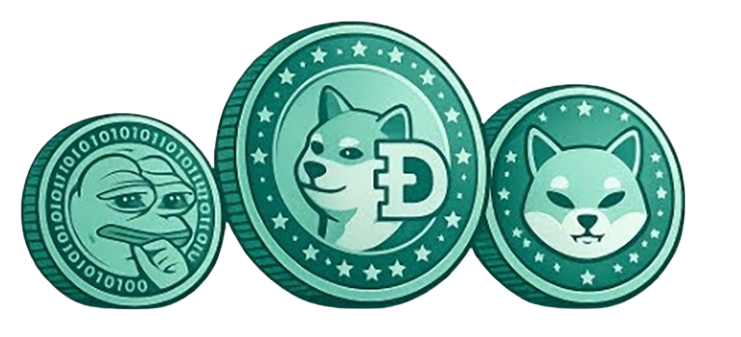
Dogecoin has Elon Musk, a decade of history, and is accepted as payment in some corners of the internet. Shiba Inu spent years building out a DEX, a Layer 2 network, and a multi-token ecosystem.
PEPE took the opposite approach: no team, no roadmap, no utility, and was completely upfront about all of it.
That honesty is actually a differentiator. Where other projects have made promises and underdelivered, PEPE never made any. A feature or a red flag? It depends on what you're looking for.
PEPE | Dogecoin (DOGE) | Shiba Inu (SHIB) | |
Launched | 2023 | 2013 | 2020 |
Blockchain | Ethereum | Own chain | Ethereum |
Team | Anonymous | Known founders | Pseudonymous |
Utility | None | Limited payments | DEX, Layer 2, NFTs |
Roadmap | No | Informal | Yes |
Tax on transactions | No | No | No |
Burn mechanism | Yes | No | Yes |
Biggest backer | Community | Elon Musk | Community |
The Frog Has Left the Building, But the Lessons Haven't
Meme coins aren't really our corner of the crypto world. At LearningCrypto, we're more interested in on-chain fundamentals, network health, and assets with verifiable value than tokens driven purely by social sentiment.
But the PEPE story is genuinely worth understanding. It's a masterclass in how internet culture, community dynamics, tokenomics, and market psychology collide in crypto.
The August 2023 wallet incident alone is one of the most instructive real-world examples of anonymous team risk you'll find. And watching a comic strip frog outpace Dogecoin's four-year milestone in three weeks tells you something real about how this market moves.
Understanding what PEPE is and why it behaved the way it did makes you a sharper reader of the broader market. That's never wasted knowledge.
If you want to go deeper than the story of a frog, LearningCrypto is built for exactly that.
We give you the tools to read the blockchain yourself, live on-chain data, smart-money tracking, an AI copilot that cuts through the marketing spin, and a private community of independent investors focused on the crypto fundamentals that actually matter.
FAQs
Can PEPE ever reach $1?
Mathematically, it's not realistic. With a maximum supply of 420 trillion tokens, a $1 price would require a market cap exceeding $420 trillion - that’s roughly three times global GDP. It's one of those questions that sounds exciting but falls apart quickly on a napkin.
Where can you buy Pepe Coin?
PEPE is listed on most major centralised exchanges, including Binance, Coinbase, Kraken, and OKX. It can also be traded on decentralised exchanges like Uniswap using an Ethereum-compatible wallet such as MetaMask.
Always verify the contract address (0x6982508145454ce325ddbe47a25d4ec3d2311933) before buying, as fake tokens using the PEPE name do exist.
What is the difference between PEPE and Pepe 2.0?
They are completely separate and unrelated projects. Pepe 2.0 is widely believed to have been created by developers who left the original PEPE project. The practical difference is that Pepe 2.0 carries a 1% transaction tax, something the original PEPE explicitly avoided from day one.
Does PEPE have a development team working on it?
Not in any traditional sense. The project has no active development roadmap and no public team building new features. Core decisions are reportedly handled by a small group of anonymous individuals. What you see on-chain is largely what exists.

The On-Chain Brief
Free Every Week
The On-Chain Brief
Free Every Week
The On-Chain Brief
Free Every Week
Secure your edge: Get Crypto Made Easy PDF + weekly insights—free today.
No spam, unsubscribe at any time. By subscribing, you agree to our Privacy Policy. Need to unsubscribe? Unsubscribe from newsletter.
Disclaimer: This article is for educational purposes only and does not constitute financial advice. Cryptocurrency investments carry risk; you should always do your own research before making any investment decisions.