What Is a Seed Phrase and Why It's Critical to Crypto Security
TL;DR A seed phrase (also called a recovery phrase, backup phrase, or mnemonic phrase) is a sequence of 12-24 randomly generated words that serves as the master backup for your cryptocurrency wallet. Anyone with your seed phrase has complete access to all your crypto assets. Protecting your seed phrase is the single most important security practice in cryptocurrency self-custody.
Most people first see a seed phrase during wallet setup. A screen appears. Twelve or twenty-four words are shown. You are told to write them down and keep them safe.
At that point, many users do not fully understand what those words actually represent. A misunderstanding that’s often cleared up about 5 minutes after their funds disappear.
In a self-custody wallet, the seed phrase is more than just a backup. It is the wallet. If someone else gets it, they get full access. If you lose it, your funds are gone for good.
It does not have to happen to you. Most losses come from the same small set of avoidable mistakes, and those are exactly what this guide is here to prevent.
What You'll Learn
What seed phrases actually are (and why they're not just a fancy backup code)
How 12 words can control unlimited crypto addresses across multiple blockchains
The exact mistakes that make people lose their funds permanently
Why your seed phrase works in any compatible wallet, anywhere, anytime
What "wallet recovery" actually recovers (and what it doesn't)
How to spot the scams specifically designed to steal seed phrases
The security steps that matter versus the ones that don't
Seed Phrase Basics: Your Crypto Master Key
What Is a Seed Phrase?
A seed phrase is a 12-24-word sequence that represents your wallet's master private key.
These words are not chosen for meaning or memorability. They are chosen because they map cleanly to entropy. Each word represents a specific value. When combined in the correct order, they recreate the exact same cryptographic root every time.
The words are derived from a standardized list of 2,048 words called the BIP-39 wordlist. When you first create a wallet, the software generates these words randomly.
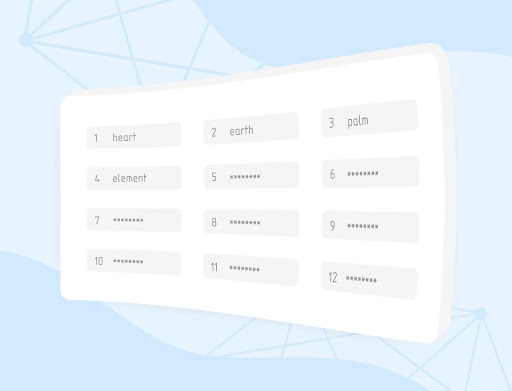
A typical 12-word seed phrase looks something like this:
witch collapse practice feed shame open despair creek road again ice least
The words are always lowercase and simple. They're presented in a numbered list as the order matters. You need to enter them in the exact sequence every time.
The same seed phrase will always generate the same wallet addresses. This deterministic property means you can use your seed phrase across different compatible wallet applications and always access the same crypto.
The words are simply a portable way of carrying the underlying key material without exposing raw cryptographic data.
What Seed Phrases Look Like
Every seed phrase follows the same format. You'll see lowercase English words with no punctuation or special characters. The most common lengths are 12 words for standard security and 24 words for extra protection.
Wallets typically display them as:
word1
word2
word3 ... and so on
Example words from the BIP-39 wordlist include: abandon, ability, able, about, above, absent, absorb. These aren't random phrases like "correct horse battery staple" but specific words selected from the standardized list.
So keeping them in order matters a lot. "witch collapse practice" is completely different from "practice witch collapse." Even one word out of place means a different wallet with different addresses.
Seed Phrase vs. Password vs. Private Key
These three do very different jobs, but are often a cause of confusion for crypto beginners.
Element | What It Does | What It Looks Like | Can You Change It? | What It Protects |
Seed Phrase | Master backup that generates all keys and addresses | 12-24 words from standardized list | No - create new wallet instead | Everything in your wallet |
Password | Protects wallet app on your device | Whatever you choose | Yes - anytime | Only device access |
Private Key | Controls single address | 64-character hex string | No - tied to that address | One specific address |
A password protects your wallet app on your phone or computer. If someone steals your device, the password stops them from opening the app. But if they have your seed phrase, the password is irrelevant, as they can restore your entire wallet on their own device.
Private keys control individual addresses. Your seed phrase automatically generates all of them, so you don't need to manage private keys separately. This is why seed phrases are so powerful: one backup recovers everything.
How Seed Phrases Work Technically
Behind the simple list of words is a tightly defined cryptographic process. This process ensures that the same seed phrase always produces the same wallet and that the results are mathematically predictable but practically impossible to reverse without the phrase itself.
This system is based on three open standards: BIP-39, BIP-32, and BIP-44.
Here’s how it works:
Step 1. Generating Random Entropy
Everything starts with randomness. When you create a new wallet, the software generates a large block of random data called entropy. This is usually:
128 bits for a 12-word seed phrase
256 bits for a 24-word seed phrase
The quality of this randomness matters. Good wallets use secure hardware randomness or operating system level cryptographic randomness. Poor randomness weakens the entire wallet before it even exists.
Step 2. Adding a Checksum
A small portion of checksum data is added to the raw entropy. This checksum is used later to detect typing errors or missing words when restoring a wallet.
This is why:
Not every random list of words is a valid seed phrase
A wallet can instantly tell when one word is wrong during recovery
The checksum is part of what makes seed phrases reliable as a recovery tool.
Step 3. Converting Entropy Into Words (BIP-39)
The combined entropy and checksum are then split into small, equal-sized chunks. Each chunk maps to one word from a fixed list of 2,048 predefined words.
This word list is carefully designed:
Every word is unique within the first four letters
No words sound too similar
No plurals or ambiguous spellings
All words are lowercase
The result is your 12, 18, or 24-word seed phrase.
At this point, the words themselves hold all the cryptographic information needed to rebuild the wallet.
Step 4. Turning the Seed Phrase Into a Master Key
When you enter your seed phrase into a wallet, the software runs it through a cryptographic function that produces a master private key. This becomes the root of your entire wallet.
From this master key, everything else is derived.
No external servers are contacted. No accounts are created. The wallet is rebuilt entirely from your device using math alone.
Step 5. Deriving All Wallet Addresses (BIP-32 and BIP-44)
Using deterministic derivation rules, your wallet generates:
All of your private keys
All of your public addresses
Separate paths for Bitcoin, Ethereum, and other chains
Separate paths for change addresses and accounts
This is why a single seed phrase can control many different blockchains and thousands of addresses at once.
Every new address is mathematically linked back to the original seed phrase through the same derivation tree.
Why Seed Phrases Use Words Instead of Numbers
Words reduce human error compared to long strings of numbers or characters. When you write down 12 words, it's easier to get them right than copying a 64-character hexadecimal string.
The checksum built into the last word helps catch typos. Many wallets can detect when you've entered an invalid combination and suggest corrections.
The BIP-39 wordlist exists in multiple languages, making seed phrases accessible globally. Some people memorize their seed phrase as an additional backup, though this should never be your only backup method.
Words are also more error-tolerant when you need to type them in. If you make a small typo in a long hex string, the entire thing fails.
Why Seed Phrases Are So Important
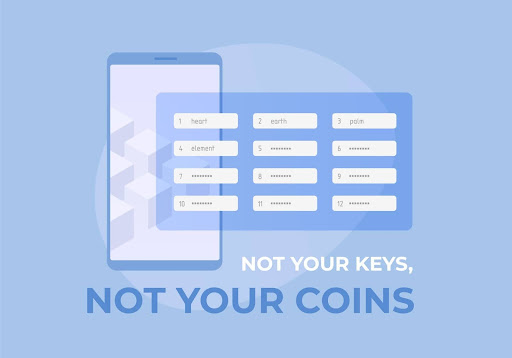
A seed phrase is the single point of control for a self-custody wallet. Everything else in your setup exists to make using that wallet easier or safer, but none of it replaces the seed phrase.
If you strip crypto back to first principles, blockchains do not know who you are. They do not recognize names, emails, phone numbers, or accounts. They only recognize cryptographic keys. The seed phrase is the source those keys come from.
What Your Seed Phrase Controls
Your seed phrase grants access to:
All current cryptocurrency balances in that wallet
All future funds sent to any address derived from that wallet
Complete transaction history and spending ability
Access across unlimited devices and wallet applications
Recovery capability after device loss, theft, or failure
Legacy access that can be passed to heirs with proper planning
A single compromised seed phrase means all of these are at risk. There's no partial access.
It Is the Only True Backup
If your phone breaks, your laptop is stolen, or your hardware wallet fails, the only thing that allows recovery is the seed phrase. Without it, there is no technical pathway back to your funds.
There is no central authority that can override this. No wallet company can regenerate it. No blockchain can restore it. No support team can reset it.
From a security point of view, this is both the greatest strength and the greatest risk of self-custody.
It Grants Absolute Control
A person with your seed phrase does not need access to your device. They do not need your password. They do not need approval. They can recreate your wallet elsewhere and move your funds immediately.
There are no spending limits tied to a seed phrase. There are no delays. There are no warnings. Once a transaction is signed and broadcast, it is final.
This is why seed phrase exposure almost always results in total loss.
It Outlives Every Wallet App
Wallet apps change. Companies shut down. Hardware models are discontinued. Operating systems are replaced. None of that affects the seed phrase.
As long as the phrase is intact, your wallet can always be restored using compatible software. The phrase itself does not depend on brand, platform, or product lifecycle.
This independence is what makes long-term storage possible. It is also what makes careless storage of a seed phrase so dangerous.
It Removes the Safety Nets People Expect
In traditional finance, mistakes are often reversible. Passwords can be reset. Accounts can be locked. Fraud teams can intervene. None of that exists at the protocol level in crypto.
Once funds move on chain using valid keys, the network treats that as a legitimate transaction. It does not matter whether it was authorized willingly or under deception. The rules apply the same way.
The Difference from Custodial Services
When you keep crypto on an exchange like Coinbase or Binance, you don't have a seed phrase. You have a username and password. The exchange controls the actual private keys. If you forget your password, customer service can reset it. If the exchange gets hacked or goes bankrupt, your funds are at risk. You're trusting them to hold your crypto.
With self-custody, you control the seed phrase and the private keys directly. There is no intermediary and no recovery desk. Security becomes your responsibility, but so does full ownership. Exchange failures no longer matter. This is why people say “your keys, your crypto.”
How to Properly Secure Your Seed Phrase
The Golden Rules of Seed Phrase Security
Never share your seed phrase with anyone, ever. No exceptions. Not support staff, not your crypto-savvy friend, not a "security audit."
Never store it digitally. No photos, no cloud storage, no email drafts, no password managers. Digital storage creates attack vectors.
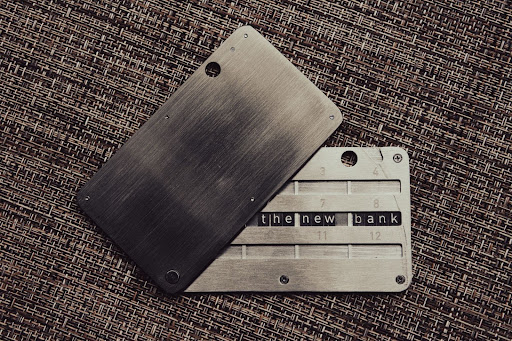
Write it down on paper or metal. Physical backup only. Paper works for most people. Metal backup plates resist fire and water damage.
Verify your backup immediately after writing it down. Restore your wallet from the seed phrase before sending any crypto to it. This confirms you wrote it correctly.
Store in a secure physical location. Home safe, safety deposit box, or similarly protected space. Not your desk drawer.
Keep multiple copies in geographically separate locations. If your house burns down, you should have a backup elsewhere.
Never enter it into any website or app except your own wallet for recovery. Legitimate services never ask for your seed phrase.
Treat it like $1 million in cash. Because that's what it might represent someday.
Advanced Security: Passphrase Extension (25th Word)
Some wallets support an optional passphrase that functions as a 25th word. This creates an entirely different wallet from the same seed phrase.
Here's how it works: Your 24-word seed phrase generates one set of addresses. Add a passphrase, and you get completely different addresses. Someone who steals your written seed phrase will find a decoy wallet with minimal funds. Your real holdings require both the seed phrase and the memorized passphrase.
The passphrase isn't written down with your seed phrase. You memorize it separately. This defeats physical theft because the thief only gets part of the key.
The risk is pretty obvious: if you forget your passphrase, your funds are permanently lost.
Most hardware wallets support this feature. You can set up a small amount in the standard wallet (seed phrase alone) and keep larger holdings in the passphrase-protected wallet.
How to Use Your Seed Phrase for Recovery
Your seed phrase is not something you use often, but when you need it, it becomes the only thing that matters. Recovery is the process of restoring your wallet on a new device or application using that phrase. When done correctly, it fully recreates your wallet exactly as it was.
When You Need Your Seed Phrase
You typically only need your seed phrase when something changes with your device or wallet environment. Common situations include a phone, laptop, or hardware wallet being lost, stolen, or permanently damaged. It is also required if a wallet app is deleted, becomes corrupted, or if a device is factory reset.
Recovery is also needed when upgrading to a new phone or computer, switching to a different wallet application, or replacing a hardware wallet. Some users also test recovery before storing larger amounts, just to be certain the backup works.
In all of these cases, the seed phrase is what allows you to recreate the wallet. Without it, the transition from one device to another becomes permanent loss.
Step-by-Step Recovery Process
Download the wallet software from the official source.
Only use the verified website or official app store link. Fake recovery apps are one of the most common ways seed phrases are stolen.Select the “Restore” or “Import Wallet” option.
Do not create a new wallet. Make sure you are entering the recovery flow.Choose the correct seed phrase length.
Most wallets use either 12 or 24 words. Selecting the wrong length will prevent recovery.Enter the words in the exact order.
Spell each word carefully and keep the original sequence. The wallet will validate the checksum and flag most typing errors.Allow the wallet to regenerate your keys and addresses.
Once accepted, the wallet recreates all of your private keys from the seed phrase.Wait for balances and transactions to synchronize.
This can take a short time as the wallet scans the blockchain.Verify that expected balances and previous activity appear.
Confirm everything looks correct before proceeding.Set a new device password or PIN.
This protects access to the wallet on that specific device.Secure both the device and your seed phrase backup.
Recovery is complete only when both are properly protected.
Recognizing and Avoiding Seed Phrase Scams
Seed phrase scams work because they target trust, urgency, and inexperience. The technical side of crypto is hard to attack directly, so scammers go after the human layer instead. Once a seed phrase is exposed, the theft is immediate and usually irreversible.
Understanding the most common attack patterns makes them much easier to spot before damage is done.
Common Scam Tactics
“Wallet Support” Scams
These usually begin with unsolicited contact on social media, email, or messaging apps. The scammer pretends to be customer support from a well-known wallet provider. They claim there is a problem with your account and tell you that you must “verify” or “restore” your wallet. You are then directed to a website where you are asked to enter your seed phrase. The site looks legitimate. Once entered, your wallet is emptied.
Fake Wallet Apps
Some malicious apps are designed to look identical to popular wallet software. They appear in app stores using names that closely resemble the real product. During setup, they display a normal-looking seed phrase screen and ask you to confirm it. Once the phrase is captured, funds are stolen as soon as any crypto is deposited.
Phishing Websites
These mimic real wallet sites using misspelled URLs or fake subdomains. Common lures include airdrop claims, urgent security updates, or wallet verification prompts. The interface often looks identical to the real one.
Physical Theft Vectors
These include pre-generated seed phrase cards inside fake hardware wallets, tampered packaging, or someone watching you enter a seed phrase in public.
Red Flags That Always Mean Scam
Anyone asking for your seed phrase for any reason is trying to steal your funds.
Websites that ask for seed phrase entry outside of your own intentional recovery process are always malicious.
Support agents offering to recover lost funds cannot do so legitimately.
Messages about wallet verification, migration, or urgent security updates that require your seed phrase are scams.
Apps or websites that claim to “validate” or “secure” your wallet using your seed phrase are also scams.
Unsolicited contact combined with urgency is one of the strongest warning signs.
There are no legitimate exceptions to these rules.
How to Verify Legitimate Wallet Software
Only download wallet software from the official website or verified app store listings. Always check the website URL carefully and watch for spelling changes or extra characters. Confirm the developer or publisher matches the real company.
Reviews can help, but fake reviews are common, so they should not be your only check. Advanced users can verify file checksums when downloading software directly.
Hardware wallets should only be purchased from the manufacturer, not third-party marketplaces or resellers. When a device arrives, inspect the packaging for tampering and confirm all security seals are intact before use.
Your Seed Phrase Is Your Crypto
Seed phrases represent complete control and complete responsibility.
This is both cryptocurrency's greatest strength and its greatest challenge. True ownership means you control your assets absolutely. It also means you absolutely must protect them.
The responsibility isn't as scary as it sounds. Following the security practices in this guide makes self-custody secure and manageable. Millions of people successfully protect their seed phrases and manage their crypto safely.
Just give that list of 12 or 24 words the security it deserves.
Now you have your seed phrase security sorted. What's next?
LearningCrypto's AI tutors can guide you through topics such as hardware wallets, exchange security, portfolio strategy, or any other crypto-related issue that has you stuck - 24/7.
Track your holdings with advanced portfolio tools, monitor real-time market data and on-chain analytics, and get personalized answers whenever questions come up.
Frequently Asked Questions
Can I change my seed phrase?
No, seed phrases cannot be changed. They're mathematically generated from your wallet's master private key. If you want a different seed phrase, you must create an entirely new wallet (which generates a new seed phrase) and transfer your funds to it. People sometimes do this if they suspect their current seed phrase may have been compromised.
What if I lose one word from my seed phrase?
Recovering with one missing word is technically possible but difficult. With 12-word phrases, there are 2,048 possible words for that missing position. Specialized software can try all possibilities. With 24-word phrases, recovery becomes more challenging. This is why proper storage and immediate verification are so important.
Can I use my seed phrase on any wallet?
Yes, but only on wallets that support the same standard (BIP-39) and derivation path. Most modern wallets are compatible, so you can restore your Bitcoin wallet seed phrase in Electrum, BlueWallet, or any other BIP-39 compatible app and access the same addresses. However, some wallets use different standards or custom implementations. Hardware wallets like Ledger and Trezor both use BIP-39, so seed phrases work across them. Always test with a small amount first when switching wallets to confirm your addresses appear correctly.
Can two people have the same seed phrase?
Mathematically possible but astronomically improbable. There are 2^128 possible 12-word combinations and 2^256 for 24-word phrases. The chance of collision is similar to randomly selecting the same specific atom from the entire observable universe twice. You're more likely to be struck by lightning multiple times while winning the lottery than to generate someone else's seed phrase.
Should I memorize my seed phrase?
Memorization can serve as an additional backup, but we don’t advise it as your only backup. Memory fails. Medical emergencies, accidents, or simply forgetting over time can lead to permanent loss. Always maintain physical backups in secure locations. If you do memorize your seed phrase, treat physical backups as the primary security method.
Disclaimer: This article is for educational purposes only and does not constitute financial advice. Cryptocurrency investments carry risk; you should always do your own research before making any investment decisions.

Cryptocurrency Education
Made Easy
Cryptocurrency Education
Made Easy
Cryptocurrency Education
Made Easy
Secure your edge: Get Crypto Made Easy PDF + weekly insights—free today.
No spam, unsubscribe at any time. By subscribing, you agree to our Privacy Policy. Need to unsubscribe? Unsubscribe from newsletter.
Disclaimer: This article is for educational purposes only and does not constitute financial advice. Cryptocurrency investments carry risk; you should always do your own research before making any investment decisions.