What Is Wrapped BTC (WBTC)
TL; DR Wrapped BTC (WBTC) is a tokenized version of Bitcoin that runs on the Ethereum blockchain. Each WBTC is backed 1:1 by real Bitcoin held in custody, allowing Bitcoin holders to use BTC within Ethereum's DeFi ecosystem. Wrapping solves a fundamental limitation: Bitcoin and Ethereum are separate blockchains that cannot communicate directly.
When DeFi summer hit in 2020, Bitcoin holders had a problem. All the action (lending, trading, yield farming) was happening on Ethereum, but Bitcoin's blockchain couldn't interact with smart contracts. The only way to participate was to sell BTC for ETH. Wrapped Bitcoin (WBTC) had launched a year earlier with a straightforward solution: lock real Bitcoin in custody, mint an equivalent Ethereum token, and suddenly, Bitcoin could go anywhere in DeFi.
This bridged two worlds but meant giving up some of Bitcoin's core guarantees.
What You'll Learn in This Guide
→ What Wrapped BTC is and what it isn't
→ Why Bitcoin can't natively run on Ethereum
→ How the WBTC minting and burning process works
→ Who controls and backs WBTC
→ Where WBTC is used in DeFi
→ Risks and trade-offs compared to holding BTC
Wrapped Tokens Explained

What Does "Wrapped" Mean in Crypto?
In crypto, a wrapped token represents an asset from one blockchain on a different blockchain.
Think of it like getting a receipt for something you've stored in a vault. The receipt (wrapped token) proves you own the original item and can be traded or used, while the actual asset stays locked up safely.
You're not creating a new coin when you wrap it. You're creating a token that stands in for that asset on another network. The wrapped version tracks the value of the original because it's backed 1:1. If you have one wrapped token, there's one real coin sitting in custody somewhere that belongs to you.
The core properties of wrapped assets are:
They represent another asset
They're fully backed at a 1:1 ratio
They exist to enable compatibility between blockchains
Wrapped tokens are commonly used to move value into environments that require specific token standards, like Ethereum's ERC-20 format.
Why Wrapping Is Necessary
Different blockchains were built for different jobs. Some prioritize security and keep things simple. Others were designed to run complex smart contracts and financial applications.
This creates a problem. Each blockchain has its own token standards and rules. An asset native to one chain can't just show up on another and start working. They're incompatible by design.
Wrapping fixes this without touching the original blockchain. Instead of rebuilding everything to talk to each other, you create a stand-in token that the destination chain understands. The original asset stays put on its home chain. The wrapped version translates between the two worlds, carrying the value while speaking the new chain's language.
What Is Wrapped BTC (WBTC)?
Feature | Description |
Launch Date | January 30, 2019 |
Founding Members | BitGo, Kyber Network, Ren |
Token Standard | ERC-20 (Ethereum) |
Backing Ratio | 1:1 with Physical Bitcoin |
Governance | WBTC DAO |
WBTC Explained Simply
Wrapped Bitcoin is an ERC-20 token pegged to Bitcoin. For every WBTC in circulation, there's one real Bitcoin locked in a secure vault. The token trades at approximately the same value as native BTC because you can always swap it back for the original asset.
WBTC exists for one reason: to give Bitcoin utility on Ethereum. When you hold WBTC, you're holding a claim on real Bitcoin. The token itself lives on Ethereum, which means it works with all the decentralized applications built on that network.
This matters because Ethereum hosts the largest DeFi ecosystem in crypto. Lending protocols, decentralized exchanges, liquidity pools, and yield farming strategies - most of these innovations happen on Ethereum. WBTC gives Bitcoin holders a way to participate without selling their BTC.
The Genesis of Wrapped Bitcoin
WBTC launched in January 2019 through a collaboration between three major players:
BitGo - provided institutional-grade custody for the Bitcoin reserves
Kyber Network - brought decentralized exchange expertise
Ren (formerly Republic Protocol) - contributed cross-chain protocol knowledge
The timing was deliberate. DeFi was still in its infancy, but the infrastructure these groups built proved crucial. They created the WBTC DAO for governance and established the merchant-custodian framework that still operates today.
When "DeFi Summer" exploded in 2020, WBTC was perfectly positioned. It became the primary vehicle for Bitcoin liquidity on Ethereum, growing into a multi-billion dollar asset that now anchors much of the DeFi ecosystem.
Who Controls WBTC Today?
WBTC operates through what's called a consortium model. Multiple organizations share responsibility instead of one company controlling everything.
The network has three types of participants:
Custodians hold the actual Bitcoin in secure cold storage wallets. These regulated financial institutions maintain professional security standards. BitGo served as the primary custodian for years, though the model now includes multiple entities across different jurisdictions.
Merchants act as intermediaries between users and custodians. When someone wants to mint or burn WBTC, they work through a merchant. Merchants must be approved by the DAO and pass rigorous compliance checks.
The WBTC DAO governs the entire network. This group of stakeholders collectively controls which custodians and merchants can participate. The DAO operates through a multi-signature contract, requiring multiple parties to approve any governance changes.
This creates checks and balances:
Custodians hold the BTC but can't mint tokens without merchant authorization
Merchants can initiate minting, but don't control underlying assets
The DAO oversees both groups through collective voting
Transparency comes from on-chain proof of reserves. Anyone can verify that backing Bitcoin exists by checking custodian addresses on the Bitcoin blockchain and comparing that to the total WBTC supply on Ethereum. This audit happens continuously and publicly.
How Wrapped BTC Works (Step by Step)
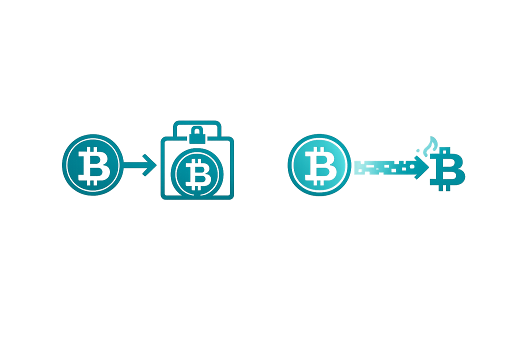
Minting WBTC
Getting WBTC involves multiple parties and verification steps. Individual users don't interact directly with custodians - you work with an authorized merchant who handles the process.
Step 1: Contact an authorized merchant and complete KYC/AML compliance checks.
Step 2: Send your Bitcoin to the merchant's Bitcoin address.
Step 3: The merchant forwards your BTC to the custodian's secure Bitcoin address.
Step 4: The custodian waits for confirmation on the Bitcoin blockchain (usually six block confirmations).
Step 5: Once confirmed, the custodian signs a transaction on Ethereum telling the WBTC smart contract to create new tokens.
Step 6: The smart contract mints the exact amount of WBTC corresponding to the BTC received and sends it to the merchant's Ethereum address.
Step 7: The merchant transfers your new WBTC to your Ethereum wallet.
The entire process typically takes 30-60 minutes, depending on network conditions.
Burning WBTC (Unwrapping)
Unwrapping works in reverse. When you want your native Bitcoin back, the process looks like this:
Step 1: Send your WBTC to an authorized merchant.
Step 2: The merchant sends your WBTC to a special burn address on Ethereum, permanently removing those tokens from circulation.
Step 3: The custodian verifies the burn transaction on the Ethereum blockchain.
Step 4: Once confirmed, the custodian releases the corresponding amount of Bitcoin from their secure storage.
Step 5: The custodian sends the BTC to the merchant's Bitcoin address.
Step 6: The merchant transfers the native Bitcoin to your Bitcoin wallet.
This burn mechanism maintains a balanced supply. Total WBTC in circulation always matches Bitcoin held in custody because tokens can only be created when BTC goes in and only destroyed when BTC comes out.
Real-World Example: Using WBTC on Aave
Let's say you have 1 Bitcoin worth $100,000 and want to borrow stablecoins without selling:
Step 1: You wrap your 1 BTC through a merchant, receiving 1 WBTC in your Ethereum wallet.
Step 2: You connect your wallet to Aave and deposit your 1 WBTC as collateral.
Step 3: Aave lets you borrow up to a certain percentage of your collateral value (typically around 70-80% depending on risk parameters). You could borrow $70,000 in USDC against your WBTC.
Step 4: You now have $70,000 in stablecoins to use however you want, while still maintaining exposure to Bitcoin's price through your WBTC collateral.
Step 5: When you're ready, you repay the USDC loan plus interest, withdraw your WBTC from Aave, and unwrap it back to native Bitcoin.
Throughout this entire process, you never sold your Bitcoin. You accessed liquidity while keeping your BTC position intact.
What Can You Do With Wrapped BTC?
Using Bitcoin in DeFi
WBTC unlocks doors that native Bitcoin can't open. Once your Bitcoin is wrapped, it can interact with the entire Ethereum DeFi ecosystem. Here are the main ways people use it.
Lending and Borrowing
WBTC is one of the most accepted collateral assets in DeFi. Protocols like Aave and Spark let you deposit WBTC and borrow against it without selling your Bitcoin position.
This matters for a few reasons. First, you avoid triggering a taxable event. Selling Bitcoin creates capital gains. Borrowing against it doesn't. Second, you maintain your Bitcoin exposure. If BTC goes up in value while you're borrowing, you benefit from that price appreciation.
You can also flip this around and lend out your WBTC to other users. Instead of your Bitcoin sitting idle in a wallet, it earns interest from borrowers. Rates fluctuate based on supply and demand, but lending typically generates more yield than just holding.
Trading and Liquidity Provision
On decentralized exchanges like Uniswap and Curve, WBTC shows up everywhere. It's a staple DeFi trading pair and a core part of liquidity pools.
When you provide liquidity, you're pairing WBTC with another asset (ETH, USDC, or a stablecoin) and depositing both into a pool. Traders who swap between those assets pay fees, and you earn a portion of those fees based on your share of the pool.
WBTC works well for this because it's highly liquid and maintains a stable peg to Bitcoin. It often serves as a "base" asset in trading pairs, similar to how Bitcoin functions on centralized exchanges. This makes price discovery more efficient across the Ethereum ecosystem.
Yield Farming and Automated Strategies
Some users take things further with automated yield strategies. Platforms like Yearn Finance accept WBTC deposits and then automatically rotate your funds between different protocols to chase the best returns.
These strategies can combine multiple DeFi activities at once. Your WBTC might be lending on Aave one day, providing liquidity on Curve the next, and participating in a different protocol the day after. The automation handles the complexity while you collect the yield.
This only works because WBTC is programmable. It can interact with smart contracts, move between protocols, and participate in complex financial operations. Native Bitcoin sitting on its own blockchain can't do any of this.
Why DeFi Needs WBTC
Bitcoin represents the largest pool of crypto wealth by market cap. Without wrapped versions, most of that capital would remain inaccessible to Ethereum-based systems.
WBTC brings that liquidity into DeFi in a form that smart contracts can use. It allows Bitcoin’s value to move through lending pools, trading venues, and financial strategies built entirely on Ethereum.
This is less about replacing Bitcoin and more about extending where its value can operate.
Risks and Trade-Offs of Wrapped BTC
WBTC isn't just Bitcoin with extra features. When you wrap your Bitcoin, you're accepting risks that don't exist when you hold native BTC in your own wallet.
Native Bitcoin in cold storage has one main vulnerability: you lose your keys, you lose your coins. WBTC adds several more things that can go wrong. The custodian could get hacked. The smart contract could have a bug. The protocols that you use with WBTC could be exploited.
Let's break down what you're actually trading away when you wrap your Bitcoin.
Custodial Risk
Native Bitcoin does not require trust in an institution. WBTC does.
The Bitcoin backing WBTC is held by custodians. That introduces counterparty risk. If a custodian fails, is compromised, or becomes inaccessible, WBTC holders could be affected.
Transparency and audits reduce this risk, but they do not eliminate it.
Smart Contract and Protocol Risk
WBTC relies on smart contracts. While these contracts have been audited and battle-tested, bugs are always possible.
There is also risk from the DeFi protocols where WBTC is used. Lending platforms, exchanges, and vaults have their own failure modes. Those risks apply whether the asset is WBTC, ETH, or anything else.
Peg and Liquidity Risk
WBTC is designed to track BTC closely, but extreme market stress can cause temporary deviations.
Liquidity dries up during volatile periods. Redemption bottlenecks can appear. While rare, these scenarios matter to anyone actively using WBTC.
Wrapped BTC vs Bitcoin
The choice between WBTC and native Bitcoin isn't about which is "better." They're different tools for different jobs.
Feature | Native Bitcoin | Wrapped Bitcoin (WBTC) |
Control | You hold the keys | Custodian holds the BTC |
Trust Model | Trustless (network consensus only) | Trust custodians, merchants, smart contracts |
DeFi Access | None | Full Ethereum ecosystem |
Use Cases | Long-term storage, payments | Lending, trading, yield generation |
Risk Level | Lower (self-custody risks only) | Higher (adds custodial + smart contract risk) |
Liquidity Options | Sell or hold | Collateralize, lend, provide liquidity |
For long-term holders: Native Bitcoin wins. Maximum security, minimal complexity, no counterparty risk.
For active DeFi users: WBTC makes sense. The utility outweighs the added risk if you're already comfortable with smart contracts.
Best approach for many: Hybrid strategy. Keep most Bitcoin in cold storage. Wrap a smaller amount you're comfortable risking to explore DeFi opportunities.
WBTC Beyond Ethereum
WBTC started on Ethereum, but it's spread far beyond that. You can now find WBTC on dozens of different blockchains, each using it as a bridge for Bitcoin liquidity.
Layer 2 Networks
Ethereum Layer 2 solutions like Arbitrum, Optimism, and Base have become major homes for WBTC. These networks offer way lower fees and faster transactions than Ethereum mainnet, which makes them perfect for active trading and smaller retail users.
WBTC is a core asset on almost every major L2. It's often one of the most liquid trading pairs available, which means better prices and less slippage when you trade.
Non-Ethereum Chains
WBTC has also moved to chains that don't use Ethereum's technology. On Solana, it shows up in high-performance lending protocols and DEXs that benefit from the network's sub-second transaction speeds.
On Aptos, WBTC launched in mid-2025 using LayerZero's interoperability protocol. The integration with Aptos brings Bitcoin liquidity to protocols like Aries Markets and Thala Labs, taking advantage of the network's parallel execution capabilities for faster DeFi operations.
Cross-Chain Bridges
Moving WBTC between different chains used to mean unwrapping back to Bitcoin and wrapping again on the new chain. Not anymore. Protocols like LayerZero and Wormhole let you "teleport" your WBTC from one chain to another without having to go through the minting and burning process again.
The Competition
WBTC isn't the only game anymore, and several have gained real traction.
Coinbase Wrapped Bitcoin (cbBTC)
Coinbase launched cbBTC in late 2024 and it's been growing fast. By mid-2025, cbBTC's supply hit over 43,000 BTC, taking a chunk out of WBTC's market share.
The appeal is straightforward: Coinbase is a well-known, highly regulated US exchange. For users who trust Coinbase more than BitGo's multi-jurisdictional custody model, cbBTC makes sense. It also integrates natively with Base, Coinbase's Layer 2 network, which gives it an edge in that ecosystem.
Decentralized Options: tBTC
Some users don't want custodians at all. For them, tBTC (from Threshold Network) offers a different approach. Instead of one company holding the Bitcoin, tBTC uses threshold signatures and a decentralized network of nodes. No single custodian controls the reserves.
The trade-off is complexity. tBTC often has higher fees and lower liquidity than custodial options like WBTC or cbBTC. But it offers something they can't: true censorship resistance. No company can freeze your funds or deny your unwrap request.
Market Split (January 2026)
The wrapped Bitcoin market is more divided than ever. WBTC still holds the biggest share, but its dominance has slipped.
Asset | Type | Supply (BTC) | Main Advantage |
WBTC | Custodial | ~125,000 | Deep liquidity, widespread integration |
cbBTC | Custodial | ~55,000 | Coinbase trust, Base network native |
tBTC | Decentralized | ~12,000 | No custodian, censorship-resistant |
Others | Various | ~15,000 | Layer 2-specific, niche use cases |
This competition is probably healthy. Users now have real choices based on their priorities: maximum liquidity, institutional trust, or decentralization. WBTC pioneered the space, but it's no longer the only option worth considering.
Conclusion: Wrapped BTC as a Bridge, Not a Replacement
Wrapped BTC exists to solve a practical problem. Bitcoin and Ethereum are separate systems, and WBTC allows value to move between them.
That bridge comes with trade-offs. WBTC extends Bitcoin’s utility but changes its trust model. It is not Bitcoin with extra features. It is Bitcoin represented elsewhere under different assumptions.
Used intentionally, WBTC can be a useful tool. Used casually, it can expose users to risks they did not expect.
Knowing that difference is what matters.
Ready to Go Deeper?
Getting to grips with how WBTC works is just one small part of the crypto world. The DeFi ecosystem moves fast, and staying informed means having access to real-time data, expert analysis, and tools that help you make better decisions.
Whether you're wrapping your first Bitcoin or managing a complex DeFi strategy, LearningCrypto helps you validate ideas instantly and execute with confidence.
Trusted by 5,000+ users who trade smarter with real data, not hype.
FAQs
Do I need to wrap my own Bitcoin to get WBTC?
No. Most people never go through the minting process themselves. WBTC can be bought and sold directly on exchanges and DeFi platforms, just like any other ERC-20 token.
How can I verify WBTC is actually backed by Bitcoin?
WBTC provides on-chain proof of reserves. You can check the custodian's Bitcoin addresses on the Bitcoin blockchain and compare the total BTC held there to the total WBTC supply on Ethereum. The WBTC website maintains a transparency dashboard showing these numbers in real-time. Anyone can audit this at any time without trusting a third-party report.
What fees do I pay to wrap and unwrap Bitcoin?
Fees vary by merchant but typically include: a small percentage fee for the wrapping service (often 0.1-0.25%), Bitcoin network transaction fees when sending to the custodian, and Ethereum gas fees when receiving WBTC.
Can WBTC be seized or frozen?
Potentially, yes. Because custodians are regulated financial institutions, they could be subject to court orders or regulatory actions that freeze assets. The WBTC smart contract also has administrative functions controlled by the DAO. This is different from native Bitcoin, where only you control your keys (if self-custodying).
Does WBTC earn the same returns as native Bitcoin?
WBTC tracks Bitcoin's price 1:1, so price appreciation is the same. However, you can potentially earn additional yield by using WBTC in DeFi.

Cryptocurrency Education
Made Easy
Cryptocurrency Education
Made Easy
Cryptocurrency Education
Made Easy
Secure your edge: Get Crypto Made Easy PDF + weekly insights—free today.
No spam, unsubscribe at any time. By subscribing, you agree to our Privacy Policy. Need to unsubscribe? Unsubscribe from newsletter.
Disclaimer: This article is for educational purposes only and does not constitute financial advice. Cryptocurrency investments carry risk; you should always do your own research before making any investment decisions.